Measuring Ground Conditions via Sound
16 March 2011
We buried speakers and microphones in the ground — and used changes in sound timbre to measure what was happening beneath the surface.
The Idea
Sports turf such as racecourses involve questions about ground condition: compaction, moisture, subsurface consistency. Traditional methods require physical contact: penetrometers, Clegg hammers, moisture probes. They sample tiny patches and extrapolate. The margin of error can be significant.
We asked a different question: could sound travelling through the ground encode the same information?
The Experiment
Physical models of sound in solids account for elasticity, density, moisture, and temperature. If we play a known test sound through the ground and record what comes out the other side, the ground condition should leave a measurable imprint on the timbre of that sound. When the ground changes, the imprint changes.
We deployed arrays of underground transducers and microphones — the Sound Loop Analysis Process (SLAP). Known test sounds were played through the transducers; the microphones recorded what the ground did to them. Cyclograms of the recorded sounds were compared against calibration references taken under known conditions using traditional methods.


The Result
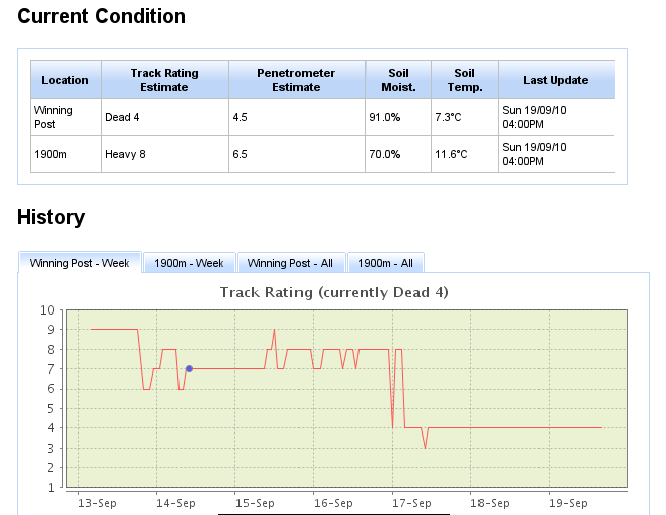
The prototype ran 24/7 for several months, gathering over 50,000 audio recordings. Measurements were automated hourly. The condition forecasts were within the same accuracy as manual measurements performed by maintenance personnel.
Measuring ground condition by timbre analysis works.